Agile CRM Strategies for SaaS Success: Boost Customer Relationships
Dr. Maya Patel
December 31, 2025
Key Takeaways
- →Comprehensive analysis of Agile CRM and its market position
- →Strategic insights for enterprise adoption and integration
- →Technical evaluation and competitive landscape assessment
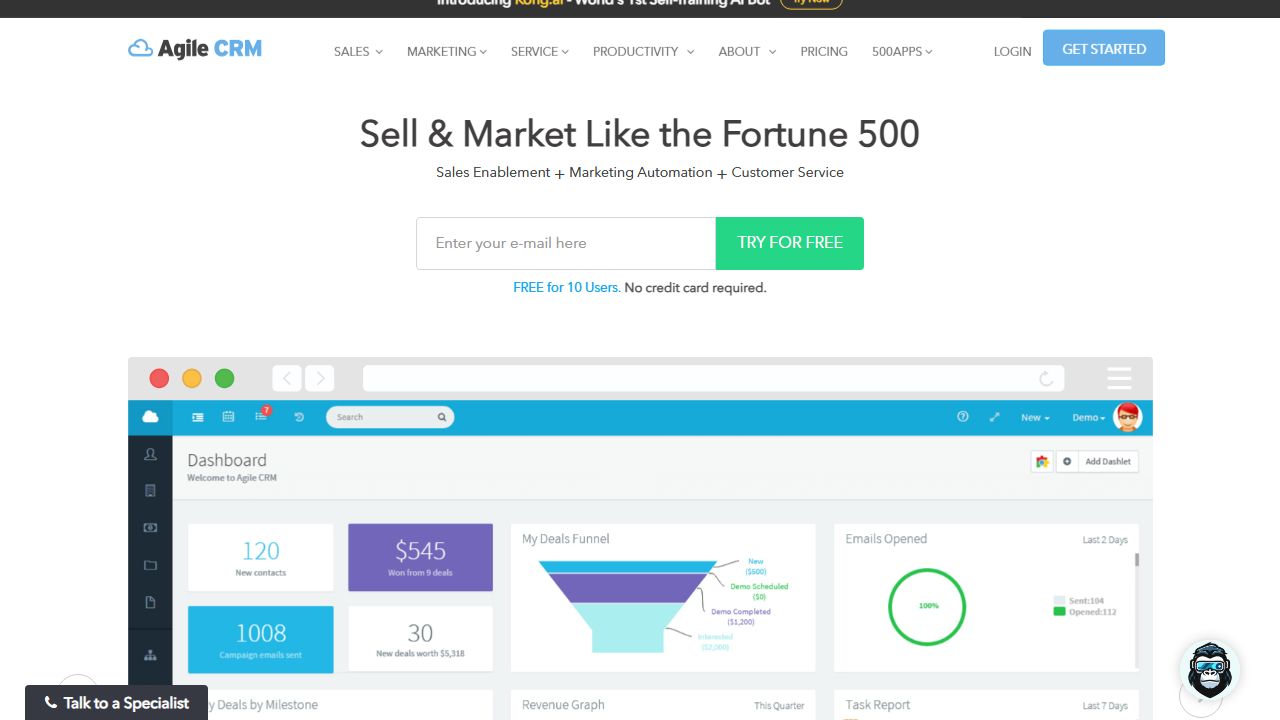
Technical Overview: Agile CRM
Agile CRM is a cloud-native customer relationship management platform built on a microservices architecture. The system leverages containerized services orchestrated through Kubernetes, enabling flexible scaling and deployment. At its core, Agile CRM employs a distributed database architecture using MongoDB for document storage and Redis for caching, allowing real-time data processing across its sales, marketing, and service modules. The platform's design philosophy emphasizes API-first development and modular components that can be deployed independently, making it particularly suitable for growing organizations requiring adaptable CRM solutions.
Architecture & Design Principles
The platform is structured around domain-driven microservices, each handling specific business functions like contact management, deal tracking, and marketing automation. This architecture enables:
- •Independent scaling of components based on load
- •Fault isolation and improved system reliability
- •Rapid feature deployment through CI/CD pipelines
The data layer implements event sourcing patterns, maintaining an immutable log of all changes for robust auditing and data recovery. Real-time analytics are powered by Apache Kafka for event streaming, while ElasticSearch handles complex search operations across the platform. The front-end utilizes React.js with a Redux state management pattern, enabling responsive user interfaces and efficient state updates.
Feature Breakdown
Core Capabilities
- •
Contact Intelligence Engine: Implements machine learning algorithms (using TensorFlow) for contact scoring and engagement prediction. Automatically enriches contact data through API integrations with third-party data providers.
- •
Automation Workflow Engine: Built on Node.js with a visual workflow designer, supporting complex branching logic and parallel execution paths. Includes error handling and retry mechanisms for reliable automation execution.
- •
Analytics Framework: Utilizes a combination of real-time processing (Apache Spark) and batch processing (Hadoop) for comprehensive reporting and dashboards. Supports custom metric definition through SQL-like query language.
Integration Ecosystem
Agile CRM provides a RESTful API with OAuth 2.0 authentication, enabling seamless third-party integrations. The platform supports both webhook-based real-time notifications and batch synchronization through API endpoints. Notable technical features include rate limiting (10,000 requests/hour for enterprise), automatic retry logic, and comprehensive API documentation with OpenAPI specifications. Native connectors exist for popular platforms like Salesforce, HubSpot, and Zapier.
Security & Compliance
Implements enterprise-grade security with:
- •AES-256 encryption for data at rest
- •TLS 1.3 for data in transit
- •SOC 2 Type II certification
- •GDPR and CCPA compliance frameworks
- •Role-based access control (RBAC) with granular permissions
- •Regular penetration testing and security audits
Performance Considerations
The platform maintains a 99.9% uptime SLA, with average response times under 200ms for API calls. Load balancing is handled through AWS ELB, with automatic scaling based on CPU utilization and request volume. Database operations are optimized through intelligent indexing and query caching, while CDN integration ensures fast content delivery globally.
Developer Experience
Agile CRM provides comprehensive developer resources including:
- •Interactive API documentation with Swagger UI
- •SDKs for major programming languages (Python, Java, JavaScript, PHP)
- •Sandbox environments for testing
- •Active developer forum and support community
- •Extensive integration tutorials and code samples
Technical Verdict
Agile CRM excels in providing a scalable, developer-friendly CRM solution with robust automation capabilities. The microservices architecture and modern tech stack make it particularly suitable for organizations requiring customization and integration flexibility. While the platform handles most use cases effectively, large enterprises with complex custom workflows might find some limitations in the workflow engine's branching logic. The system is best suited for mid-market companies prioritizing automation and requiring strong API capabilities.
Ready to Evaluate Agile CRM?
Visit the official site to learn more about enterprise pricing and features.
Visit Website→