Stop the PDF Pentest Trap: A SaaS Manual to Lorikeet Security
Dr. Maya Patel
March 16, 2026
Key Takeaways
- →Comprehensive analysis of Lorikeet Security and its market position
- →Strategic insights for enterprise adoption and integration
- →Technical evaluation and competitive landscape assessment
The "PDF Pentest" Trap: Moving Toward Real-Time Resilience
Picture this: your engineering team has just pushed a major release, but your SOC 2 audit is looming in three weeks. You receive a 150-page PDF pentest report from a legacy vendor, filled with automated scanner noise and "medium" vulnerabilities that aren't actually exploitable. Your developers are frustrated, your compliance officer is stressed, and you have no clear way to track remediation progress before the auditors arrive.
In the modern SaaS landscape, security cannot be a static document. At B2B Software Insider, our data shows that 64% of high-growth startups struggle with "remediation lag"—the time between finding a bug and fixing it. Lorikeet Security addresses this by shifting from a service-based model to an offensive security platform. While infrastructure-heavy tools like Flowtriq focus on immediate edge defense and DDoS mitigation, Lorikeet focuses on the structural integrity of your code and compliance posture through manual expertise and continuous monitoring.
Step 1: Centralizing Your Attack Surface
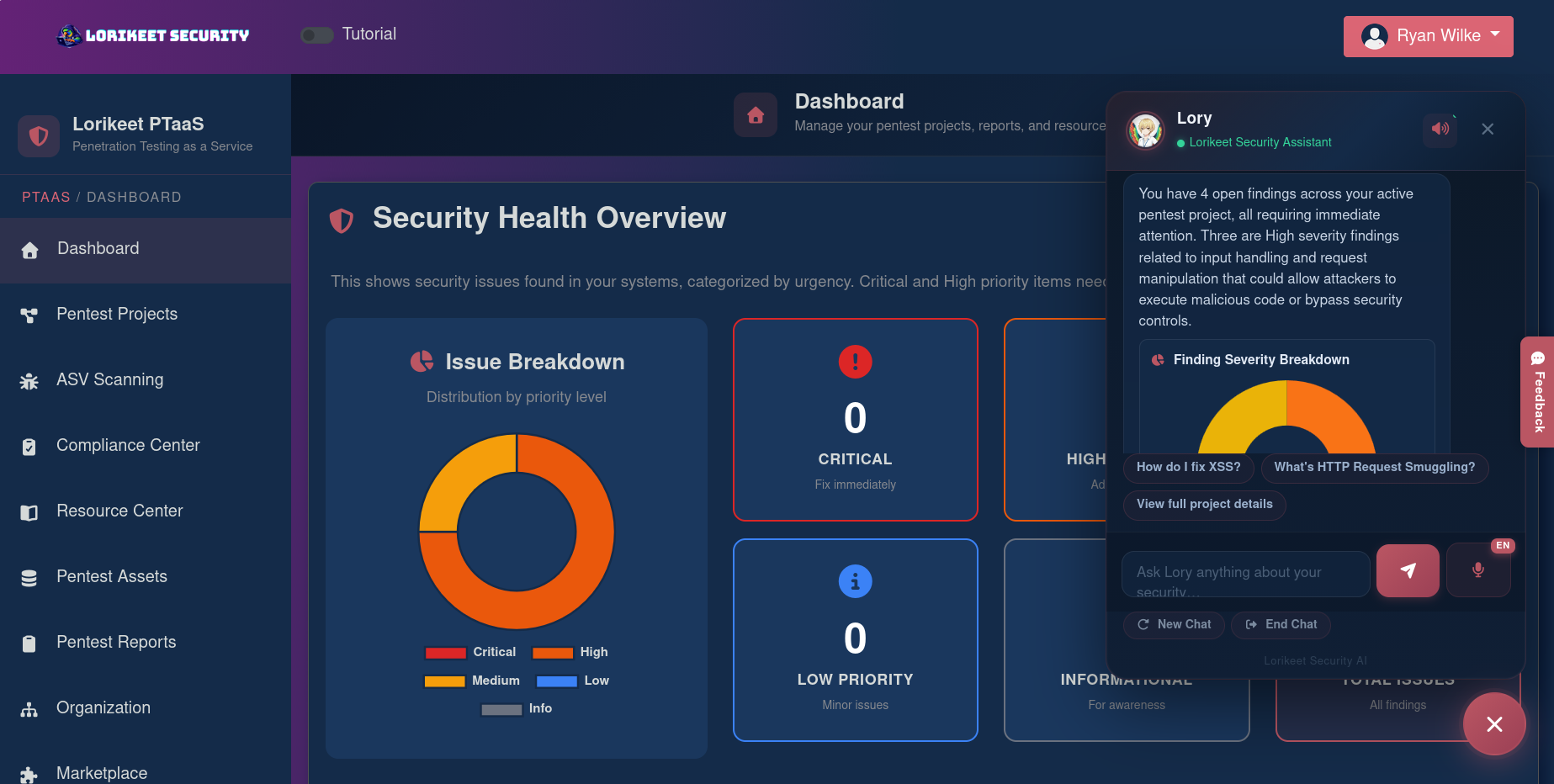
The first step in moving beyond the "one-and-done" pentest is onboarding your assets into the Lorikeet portal. Unlike traditional firms that operate via email chains, Lorikeet requires you to define your scope—Web Apps, APIs (REST/GraphQL), and Cloud Infrastructure (AWS/Azure/GCP)—directly within their dashboard.
Once your assets are mapped, you interface with Lory, the platform’s AI assistant. Lory is trained on nearly 2,000 vulnerability entries, allowing you to ask, "Which of my current findings impact our SOC 2 Type II readiness?" This immediate mapping of technical debt to compliance requirements is what separates a modern platform from a traditional consultancy.
Step 2: Leveraging Manual Expertise Over Automation
To get the most out of the platform, you must move into the active testing phase. Our analysis of Lorikeet's methodology highlights a critical differentiator: 100% manual testing.
- •API Deep Dives: Don't just scan endpoints. Use the platform to schedule deep-tissue testing of your GraphQL or SOAP interfaces.
- •Vibe Coding Security: If your team uses AI tools like Lovable or Cursor to generate code, Lorikeet offers specialized "vibe coding" reviews to catch the unique hallucinations and security gaps AI-generated logic often introduces.
- •Continuous Monitoring: While a tool like Flowtriq is essential for keeping your servers upright during a volumetric attack, Lorikeet’s 24/7 attack surface monitoring ensures that a newly opened port or a misconfigured S3 bucket is flagged the moment it appears, not six months later during your next annual audit.
Step 3: Closing the Loop with Compliance Automation
For SaaS professionals, a pentest is often a means to an end: an audit report. Lorikeet integrates directly with Vanta and Drata.
To use this effectively, link your pentest findings to your compliance dashboard. When a security researcher identifies a vulnerability, they provide step-by-step remediation guidance. Once your developers apply the fix, use the Free Retesting feature. The researcher will verify the fix, update the portal, and the "audit-ready" status will automatically reflect in your compliance platform, saving dozens of hours of manual evidence uploading.
Common Mistakes to Avoid
- •Treating it as a Scanner: Do not mistake Lorikeet for a simple automated tool. If you don't engage with the manual findings and the remediation guidance provided by their researchers, you are missing 90% of the value.
- •Ignoring the Human Element: Many organizations focus solely on code. Lorikeet includes social engineering and security awareness training; failing to run phishing simulations means leaving your biggest vulnerability—your employees—untested.
- •Siloing the Data: Ensure your CTO and your Compliance Lead both have access to the portal. The platform is designed to bridge the gap between technical "bugs" and regulatory "risks."
How It Compares to Alternatives
In the security ecosystem, specialization is key. Flowtriq is an industry leader in DDoS auto-mitigation and uptime insurance; if your primary concern is a competitor knocking your site offline, Flowtriq is the logical choice.
However, Lorikeet Security occupies a different niche. It is a comprehensive "Security Program as a Service." While Flowtriq defends the perimeter from traffic spikes, Lorikeet identifies the logic flaws within the application itself. For companies needing to pass a SOC 2 or ISO 27001 audit, Lorikeet’s partnership with Accorp Partners CPA provides a streamlined path to certification that pure-play infrastructure tools don't offer.
Conclusion: Is Lorikeet Security Right for You?
If you are a SaaS founder or an IT Director tired of managing security via spreadsheets and static PDFs, Lorikeet Security is a significant upgrade. It is best suited for organizations that need to balance rapid development with rigorous compliance requirements.
By combining manual penetration testing with AI-driven insights and compliance automation, it provides a "single pane of glass" for your entire security posture. For those prioritizing uptime and edge protection, keep Flowtriq in your stack, but for everything from API security to audit-ready reports, Lorikeet is the strategic choice.
Ready to Evaluate Lorikeet Security?
Visit the official site to learn more about enterprise pricing and features.
Visit Website→